

A routine eye test changed Carolyn Alkemade’s life forever. Diagnosed with rare ocular melanoma, she transformed shock into purpose — now speaking publicly to raise awareness and encourage people everywhere to prioritise eye health and early detection.
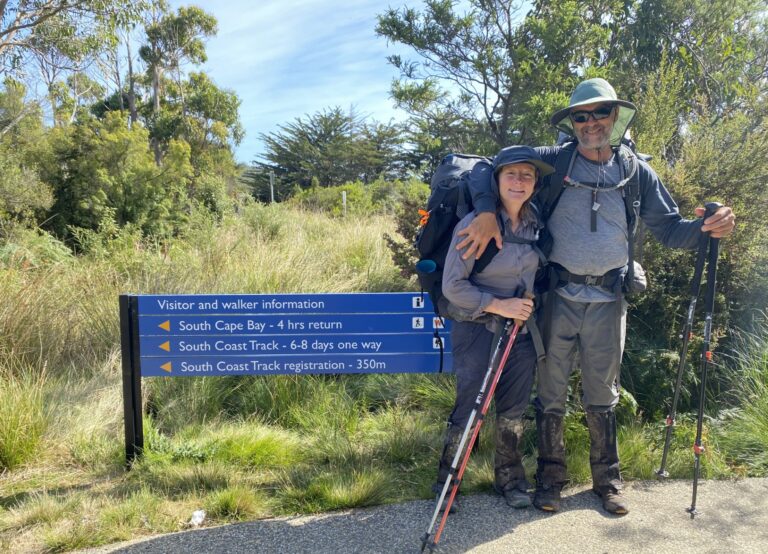
In early 2025, experienced regional nurse and East Gippsland local, Carolyn Alkemade, was looking forward to celebrating her 30th wedding anniversary and the year ahead with her husband, Mick. Health-conscious and active, the pair had just finished a gruelling, but unforgettably beautiful, 8-day South Coast Track hike through Tasmania – the latest in a tradition of anniversary adventures in the outdoors.
With the hike completed, the couple planned to treat themselves to a romantic dinner and a show in Bairnsdale. While in town, Carolyn decided to make use of some spare time and book a routine eye test. It was intended to be nothing more than a standard check-up. During the examination, Carolyn’s optometrist offered her an additional Optos (ultra-wide fundus photography) imaging of the back of her eye – more to be thorough than out of any real concern. This was followed up by a dilated eye exam and additional images. Moments later, her entire world shifted.
The optometrist detected a shadow at the back of her right eye and immediately organised an urgent referral to the Royal Victorian Eye and Ear Hospital in Melbourne. Within hours, Carolyn was sitting in the emergency department hearing a diagnosis she had never imagined: a tumour consistent with ocular melanoma, a rare form of eye cancer.
“Stories like Carolyn’s show why patient voices are essential in driving innovation and improving care, at the heart of AOMA’s mission to bring ocular melanoma patients and experts together.” Dr Rod O’Day, Ophthalmologist, Royal Victorian Eye and Ear Hospital and AOMA Member.
“In my role as a nurse, I support patients all the time as they are delivered difficult news, so I thought I understood what that moment feels like. But when it was happening to me, everything just went silent. I remember thinking, surely this is happening to someone else. I kept looking at Mick, wondering how we were meant to make sense of any of it.”
Only a handful of Australians are diagnosed with ocular melanoma each year, meaning there is limited community awareness and few people with lived experience to turn to. For Carolyn, the sense of uncertainty and scarcity of information was overwhelming, especially while navigating rapid decisions around treatment.
“I’d never even heard of ocular melanoma before. One day I was planning anniversary celebrations, and the next I was discussing radiation therapy and risk of metastasis. I felt like the ground had disappeared beneath my feet.”
Carolyn underwent brachytherapy – a complex procedure where a small radioactive plaque is attached to the eye to target the tumour. The recovery period brought physical discomfort, emotional strain, and long stretches of time with nothing to do but wait and hope.
“I’ve always been someone who keeps moving, so being forced to slow down and sit with the fear was incredibly hard. Some days, just getting out of bed and choosing to stay positive felt like a major victory.” Distance from Melbourne added another layer of challenge. Living in regional Victoria meant hours of travel for tests and appointments, and navigating unfamiliar treatment pathways with limited local support.
But support did emerge, and it changed everything. Through patient groups and connecting with others who had been diagnosed with ocular melanoma, Carolyn found guidance and reassurance that information alone could not provide. “Speaking to another patient was a turning point. Hearing someone say ‘I’ve been where you are, and there is hope’ helped lift the fog. It reminded me that I wasn’t walking this road alone.”
Donate to clinical trials to help patients like Carolyn
That turning point also sparked a realisation: if she had gained strength from someone else’s story, perhaps sharing her own could help others and raise urgently needed awareness. Since then, Carolyn has spoken openly about her experience – sharing her story on ABC radio, in local newspapers, and across social media – encouraging people to prioritise eye health and request regular dilated eye exams. The impact has already been tangible, with numerous people reaching out to tell her they had never heard of ocular melanoma before and now plan to get tested regularly. Feedback from Carolyn’s optometrist reinforced the importance of raising awareness: “Your advocacy has certainly made a difference and I still have numerous patients mention something they heard about ‘eye cancer’ which certainly did not happen 12 months ago.”
“If sharing my experience encourages someone to request a dilated eye exam, or makes another patient feel less terrified in those first awful days, then something meaningful has come from what I went through. Early detection changed everything for me and awareness really can save lives.”
“I look at life very differently now. Every ordinary day feels extraordinary. I’m grateful for the care I received, for the people who lifted me up, and for the chance to turn something frightening into something that might help others.”
Carolyn’s story highlights the critical role of research, early detection and the community created through organisations like MASC Trials and its Priority Research Special Interest Group, the Australasian Ocular Melanoma Alliance (AOMA). AOMA works to advance knowledge and improve care and treatment of ocular melanoma patients, ensuring no patient faces this disease alone, no matter where they live.
Your support helps AOMA drive collaboration and life-saving research that improves outcomes for people facing this rare and aggressive cancer.
Donate today: www.masc.org.au/ donate-to-ocular-melanoma-research.